
Difference between revisions of "Silene antirrhina"
(Tag: VisualEditor) |
(Tag: VisualEditor) |
||
| Line 3: | Line 3: | ||
Common Names: Sleepy catchfly, sleepy campion, sleepy silene | Common Names: Sleepy catchfly, sleepy campion, sleepy silene | ||
| − | Codon: SILANT[[File: | + | Codon: SILANT |
| + | [[File:SILANT2.jpg|thumb|417x417px|photo by Ben Legler]] | ||
| + | |||
==Taxonomy== | ==Taxonomy== | ||
{{Taxobox | {{Taxobox | ||
| Line 41: | Line 43: | ||
Widespread in open areas, often where disturbed. | Widespread in open areas, often where disturbed. | ||
==Photo Gallery== | ==Photo Gallery== | ||
| − | + | <gallery> | |
| + | File: SILANT1.jpg|Seeds, photo by Gerald D. Carr | ||
| + | File: SILANT3.jpg|photo by Ben Legler | ||
| + | </gallery> | ||
==References== | ==References== | ||
<references /> | <references /> | ||
Revision as of 21:51, 8 May 2020
Scientific Name: Silene antirrhina
Common Names: Sleepy catchfly, sleepy campion, sleepy silene
Codon: SILANT

Contents
Taxonomy
| Silene antirrhina | |
|---|---|
| Scientific classification | |
| Kingdom: | Plantae |
| Subkingdom: | Tracheobionta |
| Phylum: | Spermatophyta |
| Subphylum: | Magnoliophyta |
| Class: | Magnoliopsida |
| Subclass: | Caryophyllanae |
| Order: | Caryophyllales |
| Family: | Caryophyllaceae |
| Genus: | Silene L. |
| Species: | Silene antirrhina L. |
Description
General: Erect, simple to branched annual, 2-8 dm. tall, puberulent below and glabrous above, stems often glandular in bands below the nodes.
Leaves: Basal leaves oblanceolate, 3-6 cm. long and 2-15 mm. wide; cauline leaves several pairs, oblanceolate to linear.
Flowers: Flowers few to many in a compact or open inflorescence; calyx 5-lobed, tubular, 4-10 mm. long, 10-nerved, glabrous; petals 5, white to pink, with a narrow claw 2-3 times as long as the obcordate blade; blade appendages two, 0.4 mm. long; stamens 10; styles 3.
Fruits: Capsule 3-celled. [1]
Bloom Period
May-August
Distribution
Distributed widely throughout Washington; occurring across North America from low elevations to 10,000 feet. [1]
Habitat
Widespread in open areas, often where disturbed.
Photo Gallery
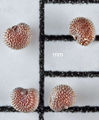
Seeds, photo by Gerald D. Carr
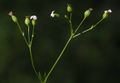
photo by Ben Legler


